
Jump to a section
Commercial roof restoration makes sense when enough of the existing roof is sound to keep, its defects can be corrected, and the proposed restoration system is compatible. Replacement becomes the stronger choice when deterioration, trapped moisture or failing materials make keeping that roof a poor investment.
A leak does not settle the question. Neither does the roof's age. At Flat Roof LLC, we assess the assembly beneath the surface, the details where failures start, and what the building needs next. The aim is to preserve useful materials without paying to cover problems that still need removal.
Restoration vs. replacement at a glance
Restoration repairs and renews a suitable existing roof. A full replacement removes the existing roofing to rebuild over an evaluated deck. The difference is what you retain, what you correct, and how much of the roof's future depends on older materials.
| Decision | Restoration | Full replacement |
|---|---|---|
| Existing assembly | Keeps suitable materials after required repairs and preparation. | Removes the specified existing roofing and addresses exposed conditions. |
| Upfront scope | Preparation, repairs, detail work and a compatible restoration system. | Removal, disposal, deck corrections and the specified new assembly. |
| Building disruption | Usually less demolition, but cleaning, application and curing still need planning. | More material handling and noise, with phased work and weather protection. |
| Main limitation | The roof you retain must be a dependable base. | Greater initial scope and investment; new work still needs proper design and maintenance. |
A coating product alone is not a restoration plan. The proposal needs to account for the failures and preparation around it, not just the square footage receiving a new surface.
When is roof restoration the right choice?
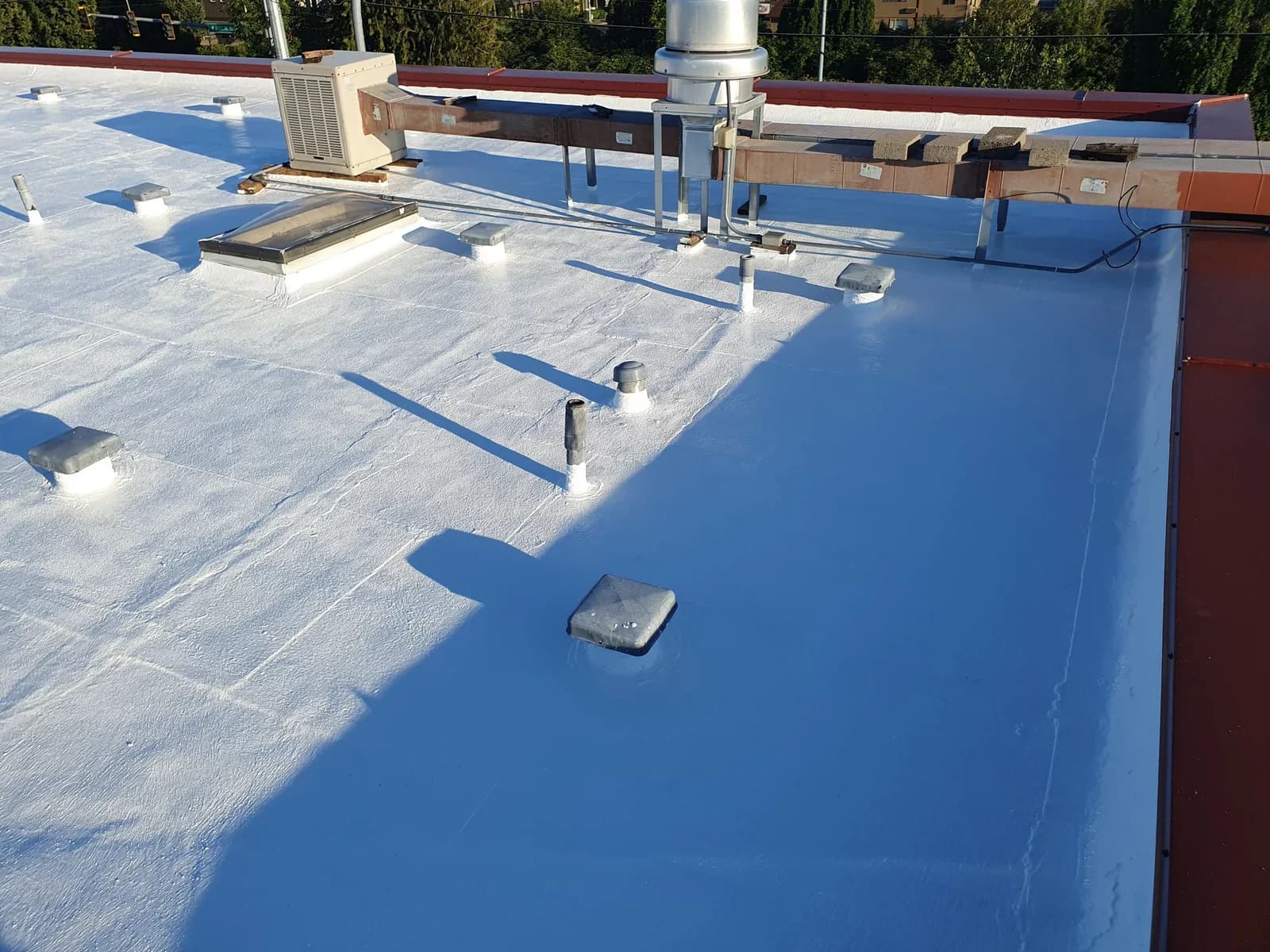
A weathered roof can still contain valuable insulation and a useful supporting assembly. Before recommending restoration, we look at whether those materials can remain and whether the surface and details can be brought into a condition the selected system can use.
A roof evaluation should connect the visible condition with the construction below it. The roof type, previous coatings and repair history help determine what needs checking. Repairing a defect before coating also means identifying its cause, rather than sealing the visible opening and leaving the same movement or moisture problem underneath.
Can the roof system beneath the surface stay?
The membrane is only the visible layer. Insulation, cover board, attachment and the roof deck also affect the decision. Moisture-related damage needs a defined correction, not an assumption that a new finish will make it disappear.
An isolated affected area and moisture spread throughout the roof are different problems. Ask what investigation supports the proposed removal area, and how the scope changes if opening the roof reveals more damage.
Repairs and preparation are achievable
Surface contamination, deteriorated patches and incompatible earlier coatings can complicate restoration. The specified cleaning, repairs and adhesion checks should establish that the new system will bond to the prepared surface.
Seams, walls, curbs, drains and pipe flashings need their own detail work. A large uninterrupted roof area may be straightforward to coat while a small equipment-dense area takes much more preparation.
Drainage works with the proposed system
Coating follows the roof's existing shape. It does not raise a low spot or move a drain. If water repeatedly collects around equipment or failed details, the proposal should identify the drainage correction as well as the surface treatment.
A product's resistance to ponding water is not a reason to ignore the building's drainage. Review outlets, overflow paths and the cause of recurring standing water as part of the complete roof.
When does replacement make more sense?
Replacement is worth serious consideration when the work needed to keep the existing roof approaches a rebuild, or when restoration would leave the main cause of failure unresolved. The comparison should include the condition you would still own after either job.
- Wet or deteriorated materials extend across multiple roof areas, making localized correction difficult to define or justify.
- Deck deterioration, unstable support or attachment problems require access below the roofing.
- The membrane or previous repairs cannot provide a suitable base for the proposed restoration system.
- Drainage problems require broader changes to the assembly rather than another surface repair.
- The building needs a different insulation, equipment or long-term roofing arrangement that restoration would not provide.
Replacement also creates an opportunity to reconsider the assembly instead of reproducing an old problem. That does not mean every stained ceiling calls for tear-off. It means the recommended scope should explain why the existing roof can or cannot serve the next stage of the building's life.
What our commercial roof replacement work coversWhere do repairs and roof overlays fit?
There are more than two possible answers. A defined defect in an otherwise usable roof may need a targeted repair, not a roof-wide restoration. Spending more is not automatically a better response to a localized problem.
An overlay, also called a recover, adds a new roofing system over an eligible existing assembly. That differs from renewing the surface of the current system. Retained materials, existing layers, attachment, details and applicable building requirements all affect whether an overlay is workable.
If a proposal uses the word reroof, ask what will actually be removed and what will stay. Contractors and manufacturers do not always use restoration, recover and replacement in exactly the same way. A description of the layers is more useful than the label.
Compare the commercial roof overlay approachSee when a targeted roof repair fitsHow should you compare restoration and replacement costs?
Restoration can reduce upfront costs because suitable existing materials stay in place and much of the tear-off and disposal is avoided. That advantage shrinks when extensive preparation or concealed repairs are needed. Roof area alone will not tell you which proposal is better value.
Compare the same building, the same known defects and the same project boundaries. Otherwise, a low restoration price may exclude work already included in the replacement bid. Ask both bidders to identify allowances and explain who approves additional work.
| Ask for this in both proposals | What the answer helps you compare |
|---|---|
| A marked plan of the included roof areas | Whether both prices cover the same sections and details. |
| An itemized removal and repair allowance | How wet materials or unexpected deck repairs affect the total. |
| The complete retained and new assembly | What the investment renews and what older materials remain. |
| Drainage, edge and penetration work | Whether vulnerable details are included or priced as extras. |
| Access, protection, staging and cleanup | Which operational costs and responsibilities fall to the building owner. |
| Written warranty and ongoing care terms | What protection is actually included after completion. |
For an ownership group or property manager, compare the proposed work with the building's capital plan as well. A roof that fits a short holding period may not fit a long-term facility strategy. Neither a lower first payment nor a newer membrane answers that business question by itself.
Compare lifecycle cost, not just the first invoice
Use the same ownership period for both options. Include the initial work, planned inspections, maintenance, anticipated recoating or repairs, and the eventual removal of materials that stay in place today. Roof replacement may cost more now while changing the work you expect to fund later. A lower-cost restoration may be useful if it meets the property's needs for that period.
A lifecycle comparison should state its assumptions. Ask what useful life is being assumed for each roof system and which future costs are excluded. An assumed future cost is a planning figure, not a fixed quote.
For concealed work, agree a maximum repair allowance and the process for approving costs beyond it. Specify how quantities will be documented and priced. That gives the owner a decision point before an unexpected opening becomes an open-ended bill.
Service life and warranty length are not the same thing
Restoration renews selected parts of an existing roof. Replacement creates a new specified assembly, while still relying on the building and details it connects to. Both need maintenance, and their useful service life depends on materials, workmanship, drainage, exposure and later rooftop work.
Do not compare two bids only by the number of warranty years. A material warranty, a workmanship warranty and a system warranty can cover different causes of failure and different parts of the roof. Ask who responds to a leak and which repair costs are covered.
Keep the proposed warranty with the scope. Review exclusions for retained materials, reporting deadlines, inspections, maintenance and later equipment changes. A product advertised with an extended warranty is not proof that every building or installation qualifies for that coverage.
- What is covered: material, labor, workmanship, or the specified system?
- Who issues the warranty and who handles a service request?
- What inspection and maintenance records must the owner keep?
- What happens if another trade changes a roof penetration after completion?
Plan the work around tenants, equipment and weather
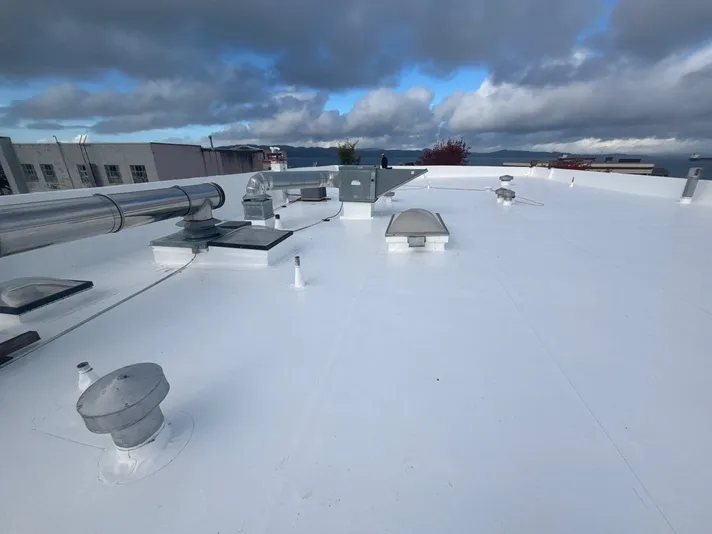
A business does not have to treat the roof project as separate from everything happening inside. Give the roofing team delivery hours, tenant requirements, sensitive work areas and planned equipment changes before the scope is finalized.
For a Portland or Vancouver property, ask how the schedule handles rain, drying time and temporary protection. Restoration has preparation and application conditions to meet. Replacement needs a plan for the areas opened during each work period. Less demolition does not mean no disruption, and a replacement does not automatically mean the entire building must close.
The plan should address material staging, pedestrian routes, equipment access and communication when a work area changes. If rooftop equipment or air intakes need coordination, identify the responsible parties before work begins. This avoids selecting a low-priced scope that depends on operating arrangements the building cannot accommodate.
Three buildings, three different roofing decisions
These are hypothetical examples, not Flat Roof LLC project case studies. They show how the decision changes with the assembly and the owner's needs.
An office with a recurring leak beside one rooftop unit
The first task is to establish the leak source and the condition around that detail. If the defect is localized and the surrounding roof remains usable, a defined repair may be enough. Quoting a full coating or replacement before resolving that question could turn a small scope into an unnecessary roof-wide project.
A weathered warehouse roof with a sound supporting assembly
Suppose the assessment supports retaining the roof, defined repairs can be completed and a compatible restoration system can be installed. Restoration deserves a full comparison with replacement. The owner can then weigh reduced removal against the retained materials, future care and the building's planned use.
A facility with widespread concealed damage and major upcoming changes
Suppose several roof areas need removal and the owner also plans significant equipment or insulation changes. Compare a coordinated replacement scope with the combined cost of extensive repairs, restoration and later alterations. A smaller initial contract can become the less useful choice when it leaves the building facing another major roof project soon afterward.
What should you ask before approving either option?
- Which findings support this recommendation, and which areas of the roof were evaluated?
- What materials stay in place, and how was their condition established?
- What happens if concealed damage is greater than the allowance?
- Which leaks, drains, edges and penetrations are corrected in this price?
- What exact system is proposed, including preparation and detail work?
- Why is this option preferable to a repair, restoration, overlay or replacement alternative?
- How will the building stay protected and operational during the work?
- What records, warranty documents and maintenance instructions will we receive?
Bring previous repair reports, leak photos and any known roof plans to the assessment. Even incomplete records help connect today's symptoms with earlier work. A useful recommendation should leave you knowing what the roof needs and what you are paying to change.
Arrange a commercial roof assessmentQuestions about restoring an existing commercial roof
Can TPO, PVC or EPDM roofs be restored?
Suitable existing membranes can be candidates for compatible restoration systems. The membrane name is not enough to specify the work: age, existing coatings, preparation, repairs and adhesion all matter. We evaluate the actual roof before choosing the method. The coating type must match the prepared roof surface, not simply the color or brand of the old membrane.
Compare TPO, PVC and EPDM roof systemsCan you restore only one section of a building?
Sometimes. Separate roof sections can have different systems, ages and conditions. The proposed boundaries and transitions must make sense for drainage and watertightness. Ask whether a phased scope solves the current problem or simply moves an unresolved detail to the edge of the project.
Do reflective roof coatings replace insulation?
No. Reflecting sunlight at the surface and resisting heat flow through insulation are different functions. If comfort or energy performance is a major goal, compare the proposed insulation assembly and building conditions rather than treating a surface color as an insulation upgrade. Roof coatings and insulation solve different parts of that problem.
Can a restored roof be recoated later?
It can be possible when the roof system still qualifies and the new material is compatible. Recoating should follow a fresh condition review, cleaning and required repairs. It is not an automatic renewal that makes earlier damage irrelevant. Compare that future scope with roof replacement when the supporting materials no longer justify keeping them.
Does an old roof automatically need replacement?
No. Age helps explain the roof's history, but the recommendation also needs its present condition and repairability. A younger roof with extensive hidden damage can require more work than an older assembly that has remained sound and well maintained.
Choose the scope your building needs
We handle commercial roof repair, restoration, overlays and replacement across Portland, Vancouver and the I-5 corridor from Salem to Olympia. That lets us assess the roof before narrowing the discussion to one service.
Tell us where the property is, what has been happening and what you already know about the roof. We will start with the condition of the complete system and discuss the work that fits your building.
Schedule my roof assessment