
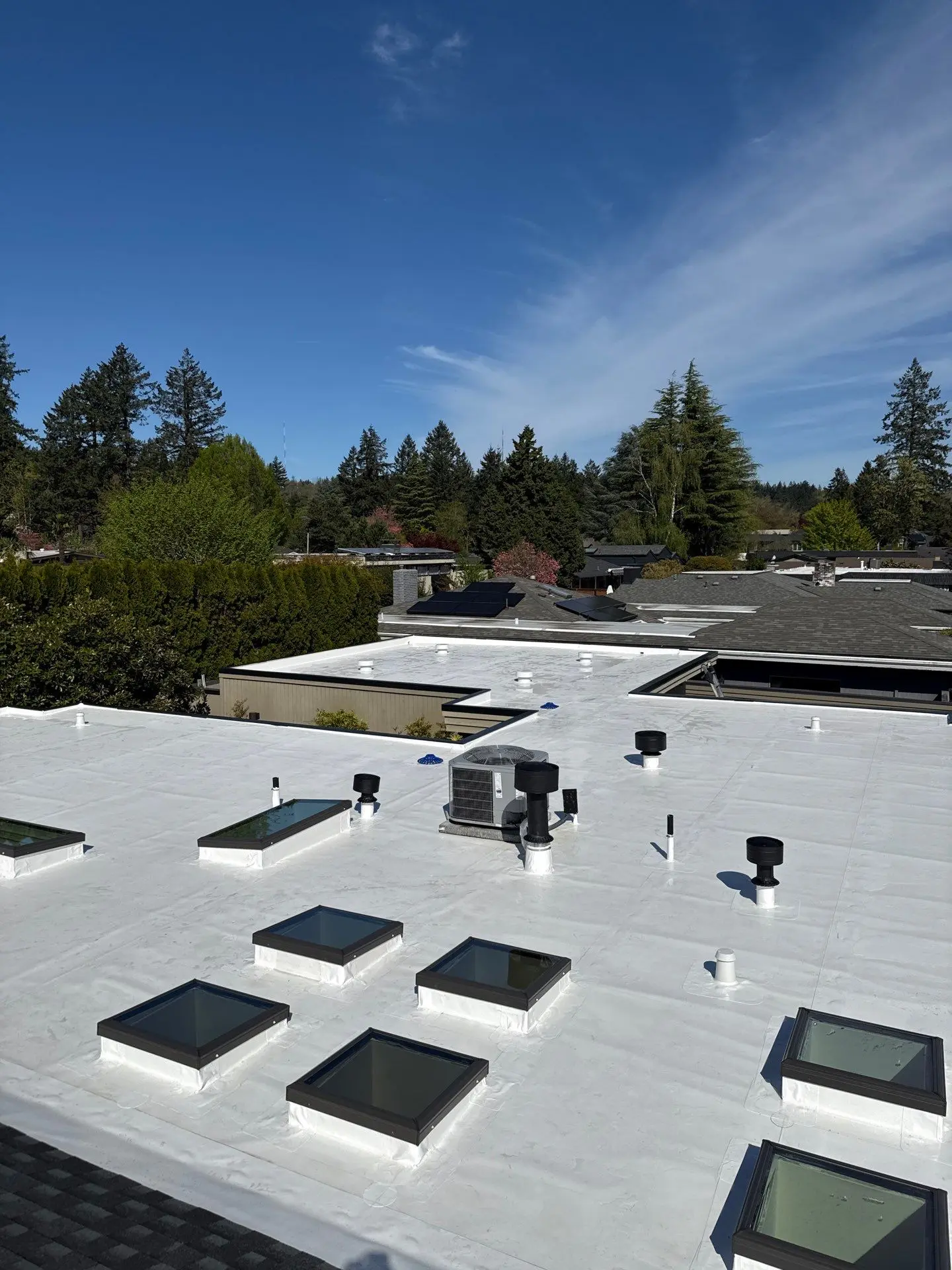
Current roof condition
The existing membrane, substrate, moisture, prior repairs, and remaining serviceability.
Select the field system around the complete roof assembly, building use, current condition, and project strategy—not a material name in isolation.
The material name is only one part of the decision. The existing roof, drainage, building use, and project goal narrow the options that make sense.
The existing membrane, substrate, moisture, prior repairs, and remaining serviceability.
Slope, drains, scuppers, low areas, edges, walls, equipment, and penetrations.
Occupancy, interior conditions, exhaust, rooftop traffic, operations, and access needs.
Repair, restore, overlay, replace, or install a new assembly—and how long the solution needs to serve the property.
Start with the system family, then look at where it may fit and the conditions that must be checked before it is recommended.
Three common membrane families for commercial low-slope roofs.
Thermoplastic polyolefin (TPO) is a reinforced single-ply membrane system with field seams joined by hot-air welding.
A candidate for new low-slope assemblies, qualified overlays, replacement work, and compatible repair scopes.
Polyvinyl chloride (PVC) is a reinforced thermoplastic single-ply membrane with hot-air-welded field seams and project-specific accessories.
A candidate where the roof design, building use, exhaust conditions, and material compatibility support the selected PVC assembly.
Ethylene propylene diene monomer (EPDM) is a synthetic-rubber single-ply membrane system.
A candidate for commercial low-slope assemblies when the deck, attachment, drainage, details, and project requirements align.
Modified-sheet and multi-ply roof assemblies.
Modified bitumen uses polymer-modified bituminous sheets, often assembled in more than one layer depending on the specified system.
A candidate for new work, reroofing, repairs, or restoration when the assembly, installation constraints, and substrate support it.
Built-up roofing (BUR) forms a roof membrane from multiple reinforcing plies incorporated into a bituminous assembly.
A candidate where a multi-ply asphaltic assembly fits the building, installation environment, and long-term roof plan.
Panel systems evaluated around slope, profile, attachment, movement, and details.
Commercial metal can include standing-seam, through-fastened, structural, and nonstructural panel conditions rather than one universal roof system.
A candidate for applicable commercial buildings, metal-roof repair, replacement, or restoration after the existing condition and panel system are identified.
Paths for eligible existing roofs, walkable surfaces, and named manufacturer systems.
A fluid-applied silicone system is a restoration path for an eligible existing commercial roof—not a universal substitute for a new membrane assembly.
A preservation option when the existing roof can responsibly remain in place and the current system requirements can be met.
TUF-DEK is a walkable PVC-vinyl waterproofing system for suitable commercial roof decks, balconies, patios, and walkways.
A specialty path for occupied walking surfaces—not a general field-roof alternative. Flat Roof LLC is TUF-DEK Certified.
IB Roof Systems is a manufacturer pathway rather than a separate generic material family.
A named-system option within Flat Roof LLC’s confirmed commercial capabilities, subject to project scope and current manufacturer requirements.
The recommendation should fit the roof and the property—not force the same material onto every building.
Document the existing system, visible conditions, drainage, details, equipment, interior evidence, and property needs.
Use moisture, deck, slope, exposure, operations, and project requirements to narrow the practical system families.
Coordinate the selected field system with supporting layers, attachment, drainage, details, and sequencing.
These are useful starting points. The roof assessment still determines which options fit the building.
Talk with Flat Roof LLC(971) 339-4299There is no responsible universal answer. The project path, existing assembly, moisture, deck, slope, drainage, building use, rooftop exposure, attachment, code, insurer or designer criteria, and current manufacturer requirements all affect suitability.
TPO and PVC are thermoplastic single-ply systems with hot-air-welded membrane seams. EPDM is a thermoset synthetic-rubber membrane whose seams and details use manufacturer-specific tapes, adhesives, and accessories. Those material differences matter, but the supporting assembly and details still shape the project.
No. Modified bitumen is a category of polymer-modified bituminous sheet roofing. Some products and assemblies use torch application, while others may use hot asphalt, cold adhesive, or self-adhered methods. The specified product and application method must be identified.
Silicone is presented here as an existing-roof restoration path for an eligible assembly, not as a universal replacement membrane. Moisture, adhesion, compatibility, preparation, repairs, drainage, and critical details must be evaluated first.
TUF-DEK belongs in the occupied, walkable waterproofing branch for suitable commercial roof decks, balconies, patios, and walkways. It should not be compared as though it were simply another general field-roof membrane.
Confirmed capabilities include TPO, PVC, EPDM, modified bitumen and torch-down, built-up roofing, silicone-restored roofs, applicable commercial metal, TUF-DEK, and IB Roof Systems. Exact repair, restoration, overlay, installation, or replacement scope still depends on the property and current roof condition.
Share the property, known roof system, visible concerns, timing, and access needs. Flat Roof LLC can help define the right assessment and next step.