
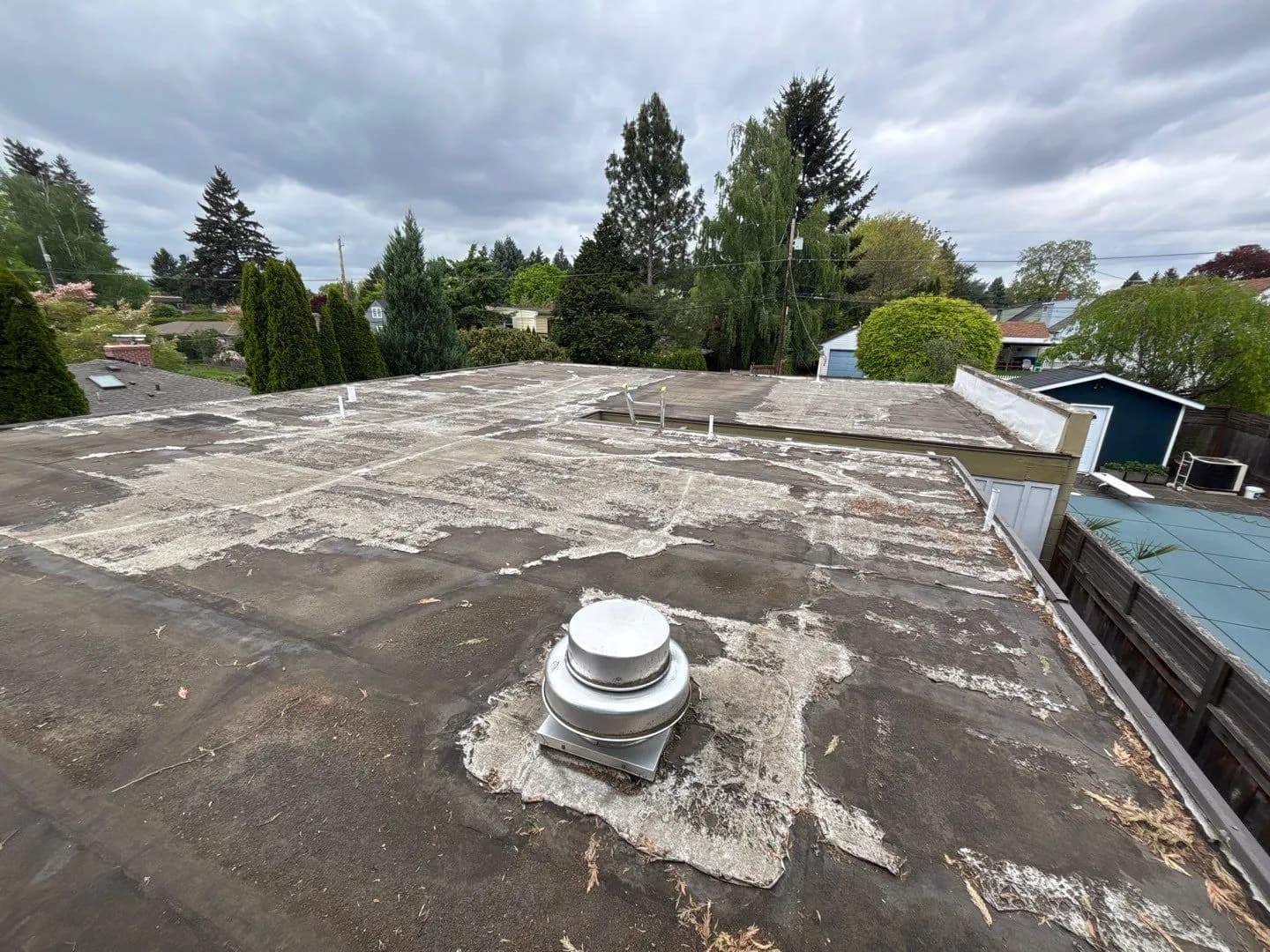
Sometimes. An aged membrane may no longer respond predictably to the same welding method used when it was new, but that does not automatically mean the entire roof must be replaced.
The real decision depends on membrane condition, adhesion, moisture below the surface, deck integrity, and whether a compatible repair can be prepared and installed correctly.
Why an older membrane may not weld reliably
Heat welding depends on clean, compatible surfaces that can fuse under controlled temperature and pressure. Long-term weathering can leave a membrane hard, oxidized, contaminated, or too fragile to form a dependable weld.
Roof age is useful context, but condition matters more than a calendar. Exposure, maintenance history, drainage, prior coatings, and rooftop traffic can age different areas of the same roof at different rates.
What a technician looks for
- A chalky, faded, cracked, or worn surface
- Edges that resist bending or fracture when carefully tested
- Exposed reinforcement or loss of the membrane's top layer
- Previous sealants or coatings that may affect adhesion
- Soft areas, trapped moisture, deck movement, or widespread distress below the membrane
When a liquid-applied repair may fit
A compatible liquid-applied repair can sometimes bridge and seal an area that should no longer be heat welded. The surface still has to be cleaned, prepared, dry, and tested for adhesion; applying material over contamination or trapped moisture does not correct the underlying failure.
This is a condition-based repair strategy, not a universal shortcut. The product and preparation method must match the existing roof and the detail being repaired.
When a surface repair is not enough
A surface repair cannot restore saturated insulation, decayed decking, structural movement, or widespread loss of membrane attachment. If the failure extends below the membrane, the affected assembly must be opened and evaluated.
That may still lead to a bounded repair, but the scope has to address every damaged layer—not simply cover the visible surface.
Repair, restore, or replace?
The best path is the least invasive option that responsibly addresses the condition found. Isolated damage with sound surrounding materials may be repairable. Broader surface aging with a dry, stable assembly may support restoration. Widespread moisture or deck failure can make replacement the responsible choice.
A roof assessment should document which condition exists and why the recommended scope follows from it.