
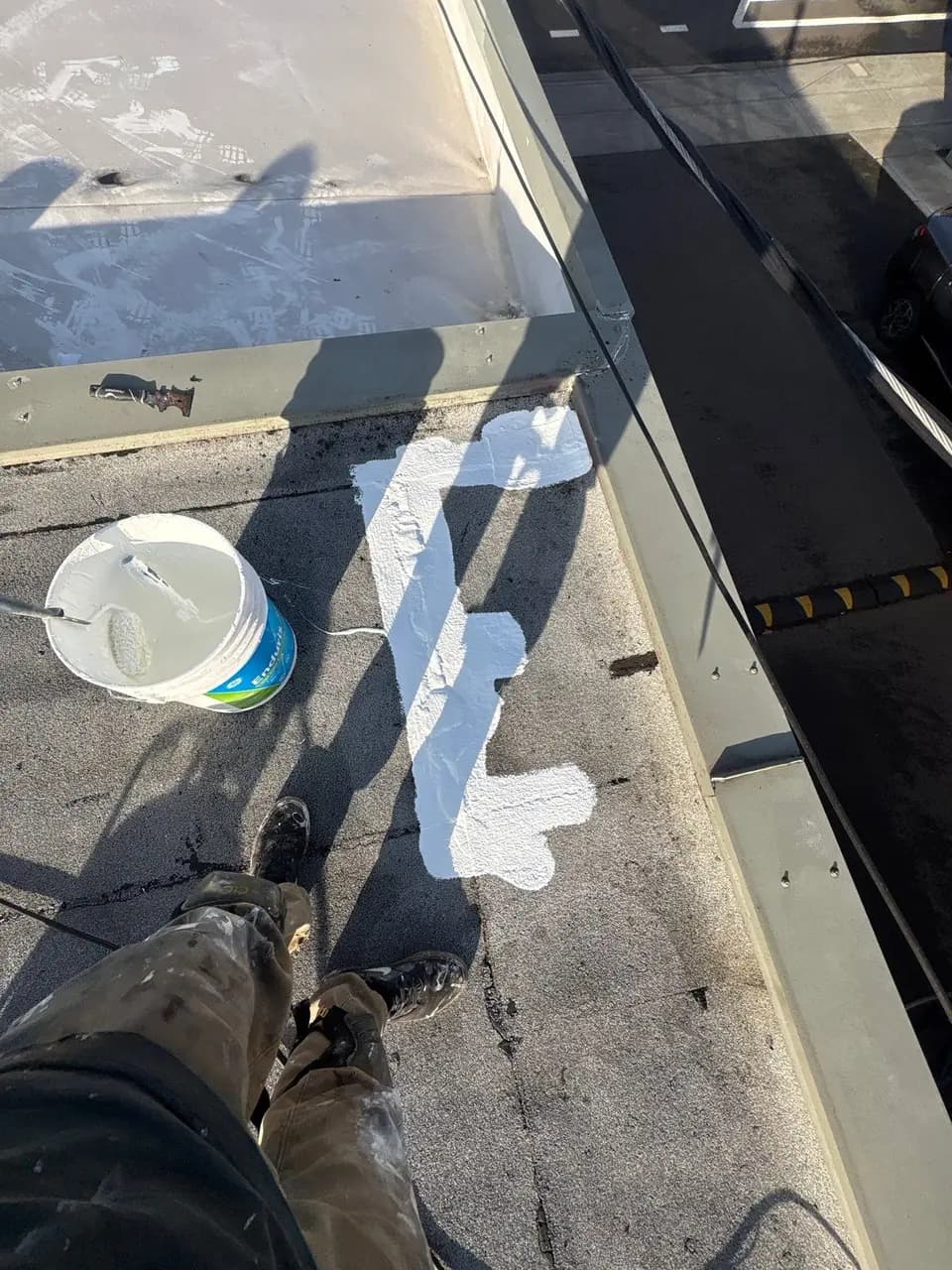
When a drip returns to the same interior location, it is tempting to blame the last patch. Sometimes the patch failed. Often, the water is still arriving from an unresolved source somewhere else in the roof assembly.
Recurring leaks are a diagnosis problem first. The pattern usually points to one or more of the conditions below.
1. Water is collecting in the same drainage area
A low area, restricted drain, or poorly performing scupper keeps water concentrated around the same seams and details. Even if one visible opening is sealed, the surrounding area remains under repeated exposure.
The assessment should look beyond the patch and verify the drainage path, outlet condition, and changes in slope caused by compressed insulation or deck movement.
2. A flashing transition is still moving
Parapets, curbs, penetrations, and roof-to-wall transitions move differently from the field membrane. A small patch may cover a crack without correcting loose metal, failed attachment, aged sealant, or the geometry that created the stress.
A durable correction may require rebuilding the transition rather than adding another surface bead.
3. The membrane has more than one connected failure
A puncture, blister, or open seam may be one part of a larger distressed area. Water can enter through one location during a wind-driven storm and another during steady rain, yet appear at the same ceiling tile.
Mapping every seam and detail in the drainage zone helps identify failures that a spot repair would miss.
4. Rooftop equipment or a penetration keeps reopening the detail
HVAC curbs, pipe supports, conduit, hatches, and later equipment additions create transitions that must remain watertight while the roof and equipment move. Service traffic can also disturb nearby membrane and sealant.
The repair must account for the equipment support, attachment, and access pattern—not only the visible gap.
5. Moisture remains inside the roof assembly
Wet insulation can store and redistribute water after the rain has stopped. That can produce continued dripping or make a repaired area appear to be leaking again.
Where moisture is suspected below the surface, the scope should establish its extent and replace affected materials before the assembly is closed.
6. The roof deck or insulation has changed shape
Deflection, compressed insulation, and damaged substrate can create low spots and stress the membrane above. Patching the surface leaves the geometry unchanged, so water and movement return to the same place.
Correcting the underlying support or drainage condition is what breaks the cycle.
How to stop the repeat-patch cycle
The objective is not a larger patch. It is a complete explanation of how water entered, where it traveled, and what must change to keep it out.
- Map interior evidence against the full roof drainage zone
- Inspect seams, penetrations, edges, curbs, and prior repairs together
- Confirm whether moisture or damage extends below the membrane
- Use a repair method compatible with the existing roof system
- Document the completed scope and recheck it after meaningful rainfall