
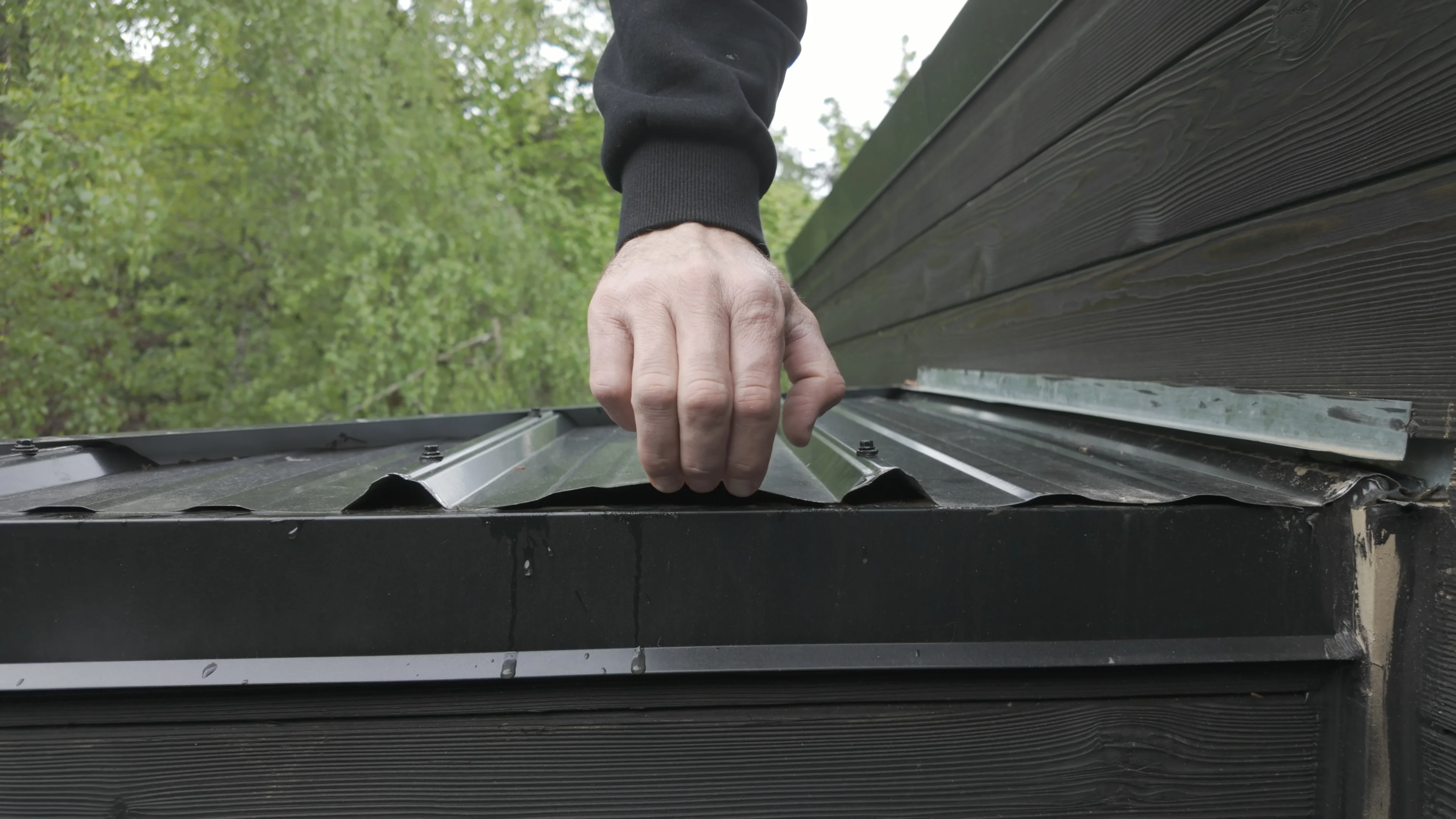
A commercial flat roof leak needs a controlled response. The immediate priorities are protecting people and property, preserving evidence, and finding the actual entry point before repair work begins.
These three steps move the problem from an interior symptom to a documented roof-level solution.
Step 1: Protect the interior and record what happened
Keep people away from wet ceiling materials, slippery floors, and any area where water may contact electrical systems or equipment. Use the building's emergency procedures when the leak affects safety-critical spaces.
Photograph the stain or drip, note the time and weather, and mark the location on a floor plan if one is available. Do not enter the roof during unsafe weather or without authorized access and fall protection.
- Move or cover vulnerable inventory and equipment when it is safe to do so
- Contain interior water without attaching anything through the roof deck
- Record recent rooftop service work or equipment changes
- Note whether the leak changes with wind direction or rainfall intensity
Step 2: Determine the source of entry
The visible drip may be several feet from the membrane breach. Diagnosis should correlate the interior evidence with the roof layout, including drains, seams, curbs, penetrations, walls, and prior repairs.
Visual assessment comes first. When conditions require it, a roofing professional may recommend controlled testing or moisture-detection methods to narrow the affected area without guessing.
Step 3: Repair the roof system—not just the opening
Once the source and surrounding condition are understood, the repair method should match the existing membrane and the depth of damage.
An isolated puncture may need a prepared membrane patch. A failed seam or flashing detail may need to be rebuilt beyond the visibly open point. Wet insulation or damaged decking must be removed and replaced before the surface is closed.
When professional diagnosis matters most
In these situations, additional patching without diagnosis can hide damage and make the eventual repair harder to define.
- The leak returned after one or more prior patches
- The entry point is not visible or changes between storms
- Multiple interior areas are affected
- The roof feels soft, unstable, or visibly deflected
- Water is near electrical equipment, critical operations, or occupied areas
Close the loop after the repair
Keep a record of the location, materials, photos, and scope completed. Check the interior and repaired area after the next meaningful rainfall, and include the location in future maintenance inspections.
That documentation helps property teams verify the result and recognize whether a later symptom is related or new.